
Durable Weight Loss
With Digestive Access
Read More
PROCEDURE DURATION
EXCESS WEIGHT LOSS
Single Anastomosis Sleeve Jejunostomy (SASJ) is a bariatric procedure that combines a sleeve gastrectomy with a single connection between the stomach and jejunum. It reduces stomach capacity and alters nutrient absorption, helping promote impactful and lasting weight loss.
Procedure Overview
-
PROCEDURE TYPE: Metabolic Surgery
-
TECHNICAL APPROACH: Laparoscopy / SILS / Robotic
-
SURGERY DURATION: 30–40 Minutes
-
FULL RECOVERY: 3–4 Weeks
-
WEIGHT LOSS: 65–80% Excess Weight
-
COMORBIDITY RESOLUTION: 60–80%
Bariatric Surgery
Durable Weight Loss With Digestive Access
Single Anastomosis Sleeve Jejunostomy combines the benefits of sleeve gastrectomy with an intestinal bypass. A larger sleeve is created first, then 180–250 cm of the small intestine is attached to the lower portion of the stomach, preserving the normal digestive route while adding a malabsorptive component for enhanced weight loss.
What sets SASJ apart is its preservation of endoscopic access to the entire digestive tract — a critical advantage for long-term monitoring and management. This makes it an excellent option for patients who need both effective weight loss and the ability to undergo future diagnostic or therapeutic endoscopy.
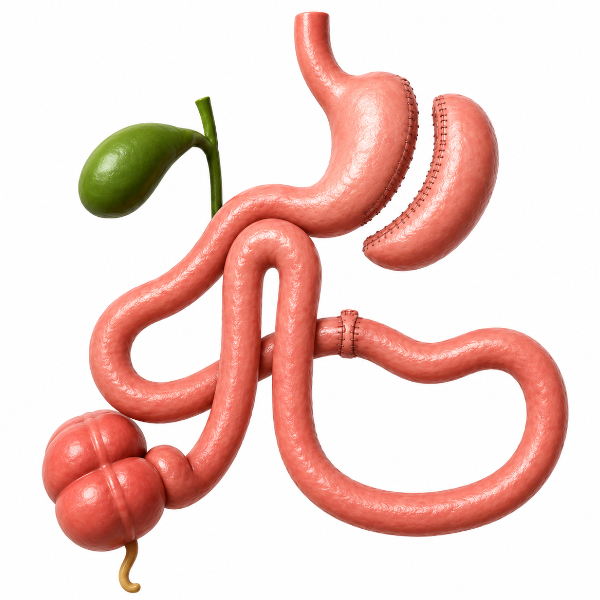
SASJ is well suited for motivated patients across a range of BMI categories and eating patterns. The procedure promotes early fullness, sustained weight loss, and significant improvement in co-morbidities including diabetes, hypertension, and dyslipidemia, while maintaining digestive continuity.
01. Who It's For
SASJ is designed for patients who need a versatile procedure that combines effective weight loss with preserved digestive access for ongoing medical monitoring.
- BMI greater than 35, or above 30 with co-morbidities
- Morbidly obese patients motivated to stay active
- Suitable for all eater types with poor quality of life
- Patients who need ongoing endoscopic access post-surgery
02. How It Works
SASJ uniquely combines restriction and malabsorption while maintaining the natural digestive pathway for long-term clinical flexibility.
Larger Sleeve Creation
A functional sleeve is created that preserves stomach capacity while restricting intake.
Jejunal Bypass
180–250 cm of small intestine is bypassed via connection to the lower stomach.
Preserved Digestive Route
Normal digestive pathway is maintained, allowing full endoscopic access post-surgery.
Dual Mechanism
Restriction plus malabsorption work together for effective long-term results.
03. Expected Outcomes
SASJ delivers weight loss results comparable to OAGB while offering the added benefit of preserved endoscopic access. Expected outcomes include:
- Effective excess weight loss comparable to OAGB (80–90%)
- Significant improvement in diabetes and blood pressure
- Preserved endoscopic access for future monitoring
- Improvement in overall quality of life and mobility

India’s leading bariatric & metabolic surgery centre at Apollo Hospitals, Chennai. Expert surgical care, proven outcomes, and lifelong support
Contact Info:
-
Address:
Institute of Bariatrics, Apollo Hospitals, 21 Greams Lane, Chennai 600006
-
Email: care@baros.surgery
-
Phone: +91 99440 99440